Distance learning has led to a self-reflection of how I’ve been structuring my class time and whether it’s a strong environment for students to be prepared for their future careers in STEM.
When I asked students to fill out the check in form to let us know how they’re doing, many expressed that they were extremely overwhelmed with the amount of assignments that they needed to do across all of their classes. We often forget that our class is just one of the many that the students are taking, and as a result, assign work that can lead to student burnout. I also fully acknowledge that many of the assignments and lessons that are assigned are necessary for students to master the content. Where I felt like I needed to improve was in being more thorough with my analysis on the benefits of the classwork that I was providing for students.
I went back and assessed where most of my assignments were at in relation to Webb’s Depth of Knowledge rubric.
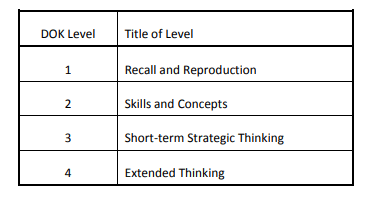
How could I continue shaping and developing my assignments and work within the classroom to incorporate more higher DOK indicators? How do I balance having students engage in higher DOK levels, but also ensure that levels 1-3 are also included?
I realized that in AP Biology, there’s such a large emphasis on ensuring that students are able to get all of the content in throughout the year and the curriculum is so dense that it can be tempting just to focus on recall and reproduction. The course itself focuses on assessing students ability to apply the content to real-world questions that require the skills to answer, while extending their thinking, rather than just recalling. It made me think about how I was structuring my course with the typical 5E’s lesson planning format, or a lesson cycle. I was placing so much focus on guided instruction in class and practice at home, when in reality, what I needed to do was flip that and work towards a flipped classroom so students can have increased time in class to extend their thinking (DOK level 4) and apply their content knowledge to develop their skills and strategic thinking (DOK levels 2 and 3).
The flipped classroom second semester is working so much better in these past few weeks that we’ve been back. The content that was being covered in class and taking so much time to cover is now covered at home. When students come into the classroom, they know exactly what they understand and what they don’t. They ask questions that they formed before class at the start of class and we can structure the lesson towards working through that content. The rest of the time is dedicated towards application of their content knowledge and my students are receiving so much more support in building their skills and extending their thinking, rather than spending all the time working on content without application.
There’s still a lot of work to be done to continue building students skills, but I’m pretty pleased with the current progress in the course. As I continue to read more research on flipped instruction and use classroom data to drive instructional decisions, this may change, but for now, students are finding a lot more value in this.
Here’s a few great research articles and content that I’ve found related to the topic:
 Daniel K Lieu, Ph.D.
Leave a comment