
This is a lesson that I’ve been learning throughout the past 3 years of being in the classroom. Initially, it was difficult to come out of the classroom without feeling defeated in one way or another. There’s always moments when I feel like students are taking their frustration or anger out on me — or even that it’s because of me.
Learning how to disconnect was really important and it helped me become calmer, more patient, and a better teacher overall. It allowed me to take more steps back during a moment of frustration to assess the needs of the student first and guide them through it so they can continue to learn in the classroom.
I have a limited number of responses for when students act inappropriately, respond with anger, are frustrated, or are not behaving like the awesome people I know they are.
- I can take offense to the disruption and let the comment or action affect me personally and address the situation.
- I’ll usually respond reactively
- The response is typically targeted at a student, whether I mean to do so or not
- The respond works against my training as a teacher and distances the student from their motivation to learn & succeed in my class
- I can pause, look at it from a different perspective with the assumption that it is not directed directly at me, and address the situation.
- Take a breather and wait for the situation to calm down
- Understand that the action from the student was inappropriate and not a good reflection of who they are as future STEM professionals.
- Walk the student through the situation and teach appropriate response to intentional or unintentional negative circumstances.
The first option focuses on reprimanding and providing quick consequences. It results in a student feeling targeted and as a result, furthers the gap between the desire for a student to learn in the classroom. The second option focuses on teaching students how to respond appropriately to situations and circumstances through reflection. The more I teach, the more I realize that the love for a subject isn’t what is going to continually fuel my passion for this career and improve my happiness, but rather the love for seeing students grow and learn in a broader sense. This includes the subject and seeing students learn about the value and real-world applications of science, but also seeing socioemotional growth in my students.
Since intentionally practicing disconnecting personal emotion from actions of students, it has helped a lot with fostering their growth and learning. When students aren’t doing anything in my class, it’s really easy to take it personally. One could naturally think: Was my lesson too boring? Is there too much guided instruction? Is the content boring? Am I boring? And… probably a lot more different options here.
However, it’s more important to focus on the student by asking:
- Is the student going through a difficult time?
- Is the student not understanding the content and as a result, not doing the in-class tasks?
- Is the student down about something that happened in the period before?
- What supports can the student receive to push them to succeed in my class?
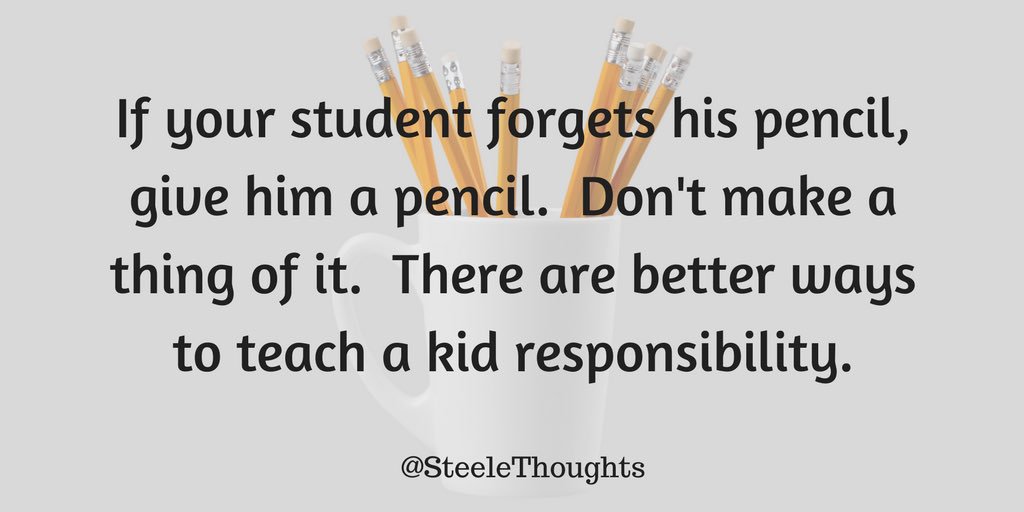
- Does the student not have a pen/pencil and are just too afraid to ask because they’ve been yelled at for that in the past? (This weirdly enough happens a lot).
By doing so, instead of taking offense to student actions, it turns into a moment to pause and assess how I can best approach the situation to further student learning. I didn’t just get into teaching because I loved teaching my content area (Science – specifically biology), but ultimately to teach students. With this in mind, it involves more than ensuring that students are successful in not only the content area, but also in their development of 21st century skills and habits of minds. Taking the step back during these situations allows for me to develop these skills and work to build future leaders in STEM in a constructive way.
This is what I’ve been learning throughout the past two and a half years. Disconnecting so that I am able to approach situations in the classroom with calmness and clarity is extremely important. Continually reminding myself of this is important and through continued practice, it’s continuing to be my default instinct. Not only am I able to maintain the classroom in the process, I also am able to exude a sense of stillness and calmness that can pass down into the classroom culture and environment. As I continue to work on this, I am excited to see how I can continue guiding and leading students not only towards being strong STEM professionals, but also students who are able to approach obstacles with a clear mind to drive strong decision-making. I look forward to continuing to practice this next semester, the semester after, and many more years into my teaching career!
 Daniel K Lieu, Ph.D.
Leave a comment